VALEO Research Project
System for improving operational reliability in the automotive industry: multimodal analysis of customer feedback and physical analysis data.
PhD student: Ms Oumeima REKLAOUI under joint supervision
Thesis Director: Abdessamad KOBI and Kamal REKLAOUI (ENSA Tetouan)
Co-supervisor: Laurent SAINTIS
Industrial supervisor: Rémi LARONDE (VALEO)
Start of thesis : september 2026
Group: Reliability Engineering and Decision-Making tools
Industrial Context
As an automotive supplier, VALEO must ensure the operational reliability of its parts in the field. Feedback—and in particular customer feedback via the “verbatim” database and physical analyses of failed parts—provides valuable sources of information for understanding failure modes. However, the diversity and heterogeneity of data sources require us to go beyond simply concatenating information.
Nevertheless, the diversity and complexity of automotive data—whether customer verbatim reports or physical analysis results—require models capable of simultaneously processing these heterogeneous data streams. The use of artificial intelligence—and more specifically, deep learning combined with data fusion methods—offers an unprecedented opportunity to improve operational reliability and deepen our understanding of component performance in the field.
Scientific contexte
Traditional approaches to reliability monitoring still rely primarily on reactive methods, basic statistical analyses, or even conventional sensor-based approaches. Pre-trained models such as BERT and XLM-RoBERTa have significantly advanced our understanding of language, including in multilingual contexts.
Recent studies demonstrate the effectiveness of transfer learning in extracting relevant information from technical corpora, particularly for spell-checking, tone detection, and the extraction of semantic relationships.
In the case of failed parts, the study of physical analysis results (e.g., mechanical tests, microscopy, degradation measurements) requires approaches adapted to structured and unstructured data. Recent works highlight the importance of linking these physical observations to verbatim records to gain a more detailed understanding of the deep causes of failure and to improve operational reliability.
Recent literature highlights the need to integrate heterogeneous data to build robust reliability assessment systems. Cross-modal attention techniques and the handling of missing or desynchronized data are among the emerging approaches for effectively combining textual and physical information.
Furthermore, explainable AI (XAI) and quantitative uncertainty measurement are becoming more important in order to respond to transparency and trust requirements in industry.
This Franco-Moroccan CIFRE thesis project aims to develop an integrated system to improve operational reliability in the automotive industry. It combines feedback data (from customers and dealerships) processed using natural language processing (multilingual NLP) models with the physical analysis of failed parts (mechanical tests, failure analyses, microscopy). The goal is to classify failure modes, correlate textual symptoms with analysis results, and optimize risk analysis processes using advanced techniques such as multimodal fusion, explainable AI, and active learning.
Project Description
After establishing the state of the art based on a literature review by cross-referencing the various keywords mentioned above—which are listed below in a non-exhaustive manner—
✔ Risk analysis
✔ Analysis of customer feedback data
✔ Operational reliability
✔ Multimodal data fusion
✔ Deep learning
✔ Natural language processing
✔ Trustworthy AI
✔ …
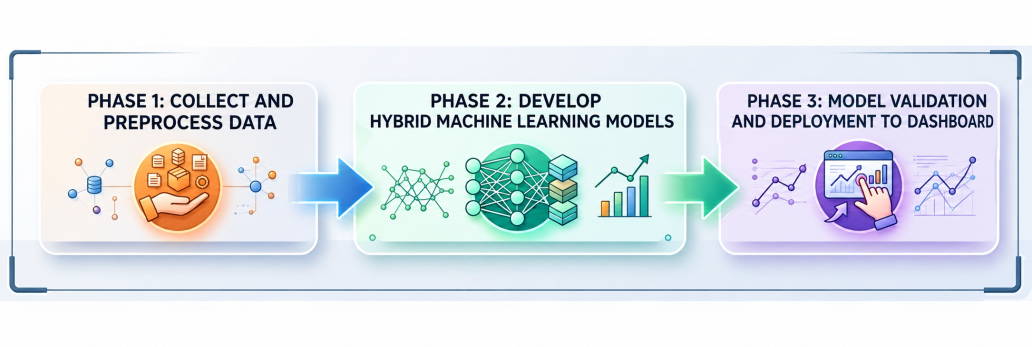
The plan is to adopt an approach structured around three phases: